

In vulnerable regions increasingly threatened by climate change, community theatre is emerging as a frontline communication tool for disaster risk reduction — both innovative and essential.
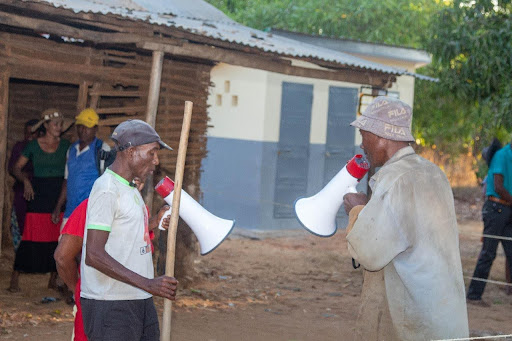
Community theatre scene
Far more than entertainment, community theatre is an essential means of disseminating early warning messages, raising awareness and mobilising collective action. Its strength lies in its ability to translate complex technical messages into emotionally resonant and culturally relevant narratives capable of mobilising an entire community.
Through a playful and accessible approach, theatre conveys messages in a simple and understandable way, even for people who cannot read or write. Its emotional and interactive nature brings scientific and technical messages to life, adapting them to local realities and cultures, which promotes rapid and effective responses.
The Importance of Early Warning Systems and Local Engagement
Early Warning Systems (EWS) make it possible to:
- Reduce loss of life and material damage
- Facilitate the organisation of emergency relief
- Limit economic losses
Every country should have functional and effective EWS. Globally, these systems are recognised as essential for reducing the devastating impacts of disasters such as cyclones and floods. Yet their effectiveness depends as much on technology as on the way local communities understand, accept and respond to alerts.
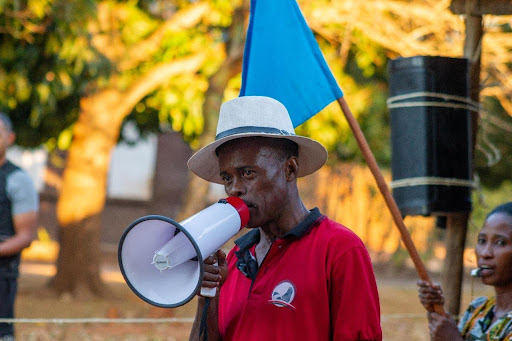
Flood warning in a village
In many rural areas, access to mobile phones, the internet or standard technologies is limited. Technology alone is not enough: messages must be received, understood and acted upon.
This is where theatre becomes strategic: it enables communities to take ownership of warning messages through familiar cultural forms of expression — storytelling, music, stage performance — in their own language and context.
Theatre as a Vehicle for Collective Learning and Action
Theatre performances stage real-life situations: receiving a cyclone alert, organising an evacuation, protecting vulnerable people, managing the aftermath of a disaster. These performances create a shared space where emotions, memories and lived experiences intersect, reinforcing understanding and emotional involvement.
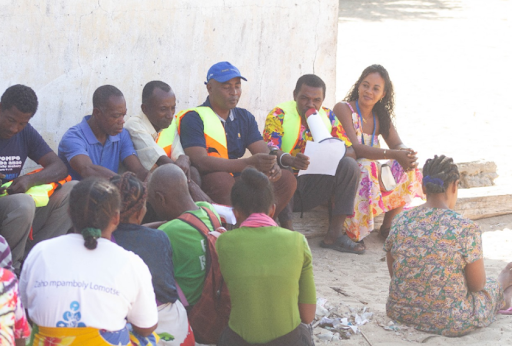
Cyclone warning scene
By grounding risks in narratives close to lived experience, theatre makes them tangible. Community members become active learners, developing a sense of responsibility. This participatory model conveys urgency in a far more impactful way than formal instructions.
Theatre creates clear and memorable narratives. When characters close to everyday life embody the messages, those messages become concrete. The repetition of certain themes reinforces memory and preparedness. By touching emotions and immediate fear, theatre promotes experiential learning and indirect preparation.
The Role of Leadership and Intergenerational Dialogue
Community leaders play a key role in the recognition and legitimisation of these performances. Their involvement reinforces the credibility of the messages, integrates traditional knowledge systems and supports the use of theatre as a tool for risk awareness. They also facilitate the formal integration of theatre into risk management plans and coordination with technical experts.
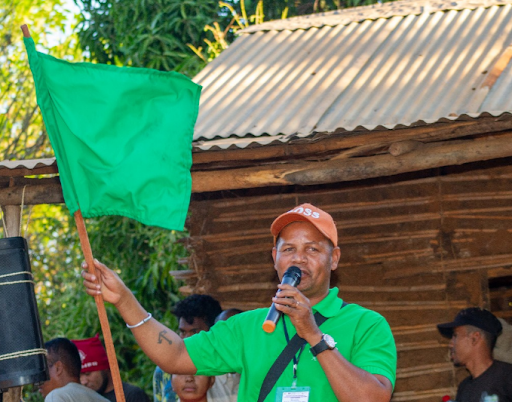
Community leaders during a theatre performance
By involving children, young people and the elderly, community theatre promotes intergenerational dialogue, ensuring that disaster preparedness becomes a shared value. This strengthens mutual trust, collective learning and participatory governance. The co-creation of solutions and the empowerment of all reinforces resilience in the face of risks.
Transforming Messages into Actions
Community theatre transforms passive recipients into agents of change. It strengthens vigilance, social cohesion and response capacity. By promoting learning through practice, stimulating emotion and fostering empowerment, it connects individuals to the dynamics of collective protection.
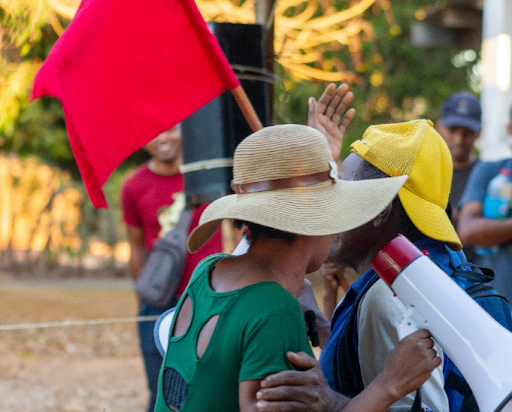
Theatre evacuation scene
Misunderstood or ignored messages can lead to catastrophe. In contrast, emotionally engaging and culturally adapted messages enable a rapid and effective response. Theatre bridges the gap between technology and human behaviour, transforming words into decisions and collective actions.
It is not only about provoking immediate reactions, but about building a safer environment through engaging education, lifestyle changes, shared responsibilities and collective governance. Theatre transforms messages into concrete actions and community decisions.
A Replicable Model for Risk Communication
The success of community theatre in strengthening communications around EWS demonstrates that it constitutes a replicable model for disaster preparedness. In the face of growing climate threats, integrating participatory and culturally adapted tools into warning strategies is no longer an option, but a necessity.
These approaches can be adapted to all contexts and types of risk. In the current climate context, their use is both a moral responsibility and a governance imperative. When a person recognises themselves in a narrative, they do not merely receive a message — they become responsible for it and pass it on.
By Anjarasoa Sedera RANDRIANIRINA & Dr Velomahanina Tahinjanahary RAZAKAMAHARAVO