

The Key Role of Awareness in the Effectiveness of Early Warning Systems
Disasters—whether floods, droughts, cyclones, or earthquakes—strike without warning. They upend lives, damage infrastructure, and wipe out years of progress. Early Warning Systems (EWS) are major technological advances in disaster risk reduction, but their effectiveness depends on an essential factor: human response. Without awareness, even the best warning system becomes a missed opportunity.
Response time can mean the difference between life and death. EWS are indispensable tools for anticipating risks, informing the population, and enabling rapid responses. But to be truly effective, people must understand the warnings and know how to react. And this education must begin at the youngest age.
Why Raise Awareness—and Why Now
Despite massive investments in forecasting technologies and risk mapping, many communities remain poorly prepared. The problem is not so much the absence of warnings as the misunderstanding of messages. Awareness is not a secondary activity: it is at the heart of risk reduction.
Communities—and children—are often the first responders. In most disasters, emergency services arrive after the initial damage. It is the residents—and sometimes the youngest—who must respond first.
Awareness transforms information into action. A warning only saves lives if it is recognized, understood, and followed by appropriate behavior.
Preparedness is a behavior, not just information. Risk communication must be integrated, repeated, and practiced to produce effective reflexes in stressful situations.
Why Target Children in EWS?
Children represent a significant—and vulnerable—portion of the population in many communities. In some countries, they can constitute up to 50% of the population. During disasters, they are often the most exposed, but they can also become key actors in the community response if they are trained and informed.
- They may need to act alone or help their relatives before help arrives.
- They are powerful information relays, capable of spreading correct behaviors to their siblings, parents, and neighbors.
- They retain information better, provided that teaching methods are appropriate and engaging.
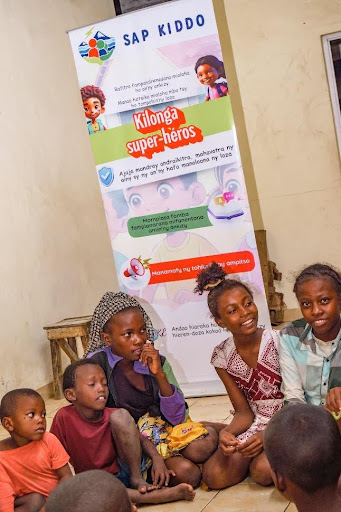
Children participating in an awareness session on early warning systems in Madagascar
What is an Early Warning System and Why is it Essential to Understand It?
An early warning system comprises four fundamental pillars:
- Risk monitoring (for example: weather tracking, river levels, seismic detection)
- Data analysis and forecasting to anticipate danger
- Warning dissemination through clear, rapid, and understandable messages
- Appropriate response from those at risk
Children must be able to recognize warning signals (sirens, radio messages, official instructions) and know how to react—evacuation, sheltering, alerting adults, etc.
Strategies That Work: How to Develop Sustainable Awareness in Children
Effective awareness goes beyond posters and occasional announcements. It must be integrated into daily life, culture, and education. For children, it must be playful, participatory, and age-appropriate.
Education and Training: Simulation Exercises and Serious Games
Interactive workshops and sessions develop risk culture by combining theoretical knowledge and practical skills, adapted to age and local context. Realistic exercises and games (role-playing, board games, alert days in schools) create reflex memory for emergencies. Learning through experience allows children to connect abstract risks with concrete actions while identifying gaps in preparedness.
Integration into School Curricula
Integrating disaster education into school curricula transforms preparedness into a continuous process. Introducing EWS concepts in civic education or science classes enables structured long-term understanding. Teachers play a key role in explaining how warnings work and what behaviors to adopt.
Adapted Communication and Local Media Engagement
Simple visual materials—drawings, songs, videos in the native language—facilitate understanding. Trusted channels (community radio, local social networks) enable better message dissemination, especially when they respect cultural references.
Active Participation of Children
Involving children in prevention clubs or community activities gives them a sense of responsibility and fully engages them. This strengthens their confidence and critical thinking in emergency situations.
Inspiring Example: EWS Kiddo in Madagascar
The EWS Kiddo program, led by the NGO ARAKE, is a child-focused initiative. Initially launched in Mananjary, Morombe, Mitsinjo, and Ankarafantsika, it is currently being expanded nationwide.
It includes interactive educational sessions, disaster simulation games, guided discussions linking theory and practice, and much more.
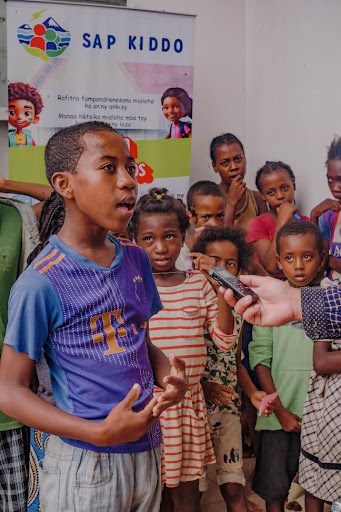
EWS Kiddo program in action: children learning essential actions during an emergency simulation
This program has significantly strengthened children's understanding of warning systems, increased their confidence in facing risks, and spread best practices within households. It demonstrates the multiplier effect of child-centered interventions in strengthening community resilience.
In 2025, following the devastating floods in Ampitatafika (more than 2,500 people affected) and the passage of Cyclone Honde in Toliara (nearly 40,000 victims), the ARAKE NGO team conducted targeted awareness and preparedness activities with children, placing them at the heart of the community response.
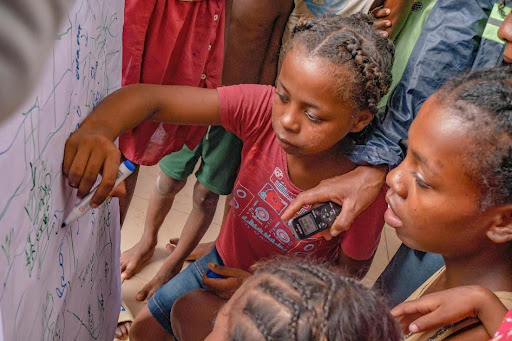
Field intervention by the NGO ARAKE with communities affected by natural disasters in Madagascar
Systemic Benefits of Awareness
When awareness is a priority:
- Lives are saved. Trained children respond more quickly and effectively.
- Community resilience is strengthened. Children spread correct behaviors around them.
- Future generations are prepared. Today's children become adults capable of managing tomorrow's risks.
Rethinking Risk Communication
Technology alone is not enough to reduce disaster risks. Social solutions are needed—and awareness is one of the most essential. Risk communication must produce behavioral change, not merely transmit information. Awareness is not simply a complement to warning systems: it is what makes them effective.
Training Tomorrow's Protectors Today
When a cyclone or flood strikes a community, the warning system may issue the signal—but it is the people who must decide what to do. We must ensure they are ready.
Disasters cannot always be prevented, but their consequences can be mitigated through good preparation. And this preparation begins with knowledge, understanding, and action—three pillars that children's awareness sustainably strengthens.
Educating children means investing in their safety, but also in that of the entire community. Children are not merely passive recipients of protection: they are essential actors in building a safer and more resilient future.