

As climate change accelerates the frequency and intensity of disasters, traditional risk communication strategies are increasingly being tested. In remote communities like Morombe, in southwestern Madagascar, reaching people with critical early warning information isn’t just a technical challenge—it’s a cultural and cognitive one.
Faced with these realities, the NGO ARAKE, through its REPRESA initiative, turned to an unconventional but deeply resonant tool: music.
Music as a Strategic Communication Tool
The decision to produce a song about EWS was not simply creative; it was tactically analytical. Music, particularly in oral cultures, functions as both a mnemonic device and a vessel for shared knowledge. By encoding practical disaster preparedness steps into melody and rhythm, the song mobilizes three essential levers:
- High recall: Catchy tunes help embed complex instructions in memory
- Emotional resonance: music captures attention, awakens empathy, and strengthens audience engagement.
- Cultural anchoring : the use of local dialects and traditional instruments inspires trust and familiarity.
This approach reflects a deeper truth in risk communication: the credibility of the messenger and the accessibility of the message are as important as the message itself.
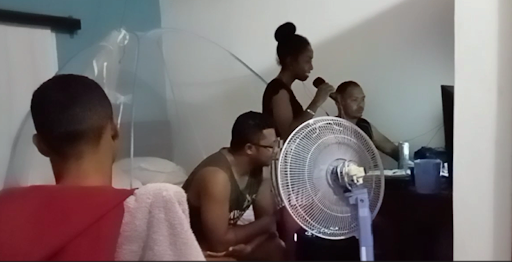
Anchored in the local culture
The song, produced in collaboration between the ARAKE team, uses regional dialects and traditional instruments such as the anjomara and the kabôsy. The lyrics are inspired by the motto used by the BNGRC: “Izay tsara fiomanana tsy ho tampohin’ny loza” (Those who have a good preparedness will be safe from the danger)
By anchoring the message in local idioms and spiritual worldviews, the song does more than inform: it legitimizes the act of preparation within the cultural logic of the community.
Transforming Information into Action
The song translates technical knowledge into behavioral cues, explaining:
- What each EWS alert level (Green, Yellow, Red, Blue) means
- What actions individuals and families should take at each stage
- Why community solidarity and mutual aid are critical during and after a disaster
By converting abstract risks into relatable scenarios and embedding them in music, the initiative improves message penetration and response readiness—especially among populations that may not access official channels.
Lessons for Disaster Risk Reduction (DRR)
This experience in Morombe is not an isolated cultural anecdote; it offers evolving lessons for DRR globally:
- Risk communication must be adapted to local, technological, linguistic and cultural realities.
- Art-based methods are not complementary, but strategic, especially in high-risk, low-access regions.
- Preparation is as much a social process as it is a technical one: music builds collective identity, solidarity and the intergenerational transmission of knowledge.
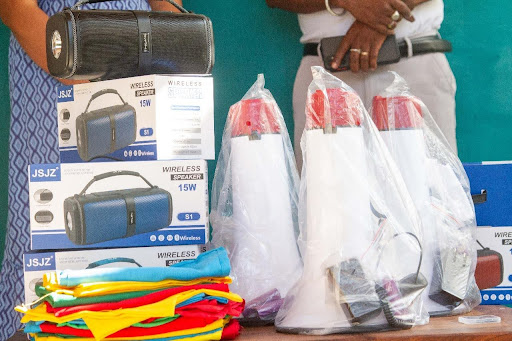
As the song is played on local radio, included in EWS kits, and taught in schools, its impact becomes multidimensional: educational, emotional, and operational.
Toward a More Human-Centered Resilience
Disaster preparedness cannot rely solely on data and alerts; it must also speak the language of people’s lived experience. In Morombe, that language is spoken through drumbeats, harmonies, and refrains.
By embracing music, the community has redefined what resilience looks like—not as a warning from above, but as a chorus rising from within. At a time when disaster risks are rising, perhaps the most powerful early warning is the one we remember by heart.
In short, this melody becomes much more than a chorus: it is a seed planted in the consciousness, the harvest of which is a better prepared society.
“To prevent by singing is to sow life-saving gestures” – DAHAD Gabin.
Click here to listen to the music
By Gabin DAHAD & Dr Velomahanina Tahinjanahary RAZAKAMAHARAVO